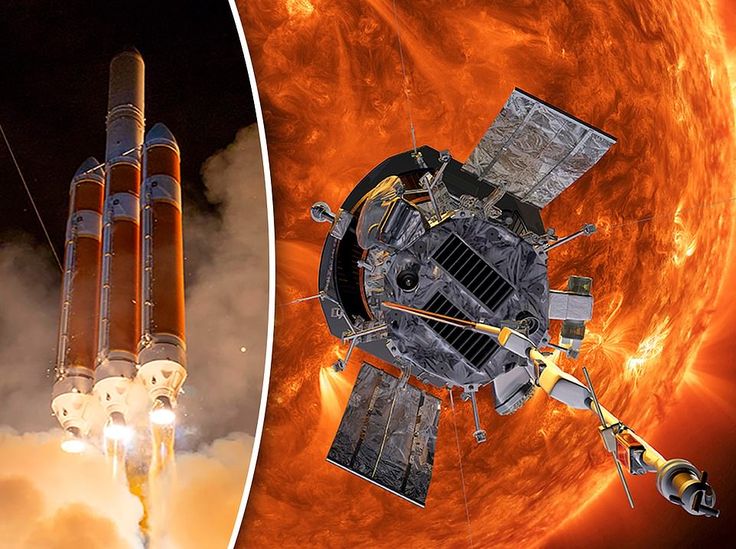
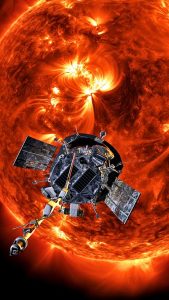
On December 24, at 6:53 AM (11:53 GMT), Parker Solar Probe will achieve its closest-ever distance to the Sun. To put this in perspective, if the Sun and Earth were the length of a football field apart, the spacecraft would be just four yards from the end zone.
NASA’s Solar Probe
Uncharted Territory
During this daring flyby, the probe will face temperatures of 870–930°C but will keep its instruments safe and cool at around 29°C thanks to its advanced heat shield. It will also travel at an astonishing speed of 690,000 kilometers per hour—fast enough to zip from Washington, D.C., to Tokyo in under a minute.
Pioneering Scientific Discoveries of NASA’s Solar Probe
By venturing so close to the Sun, the Parker Solar Probe is helping scientists answer critical questions: How does the solar wind form? Why is the Sun’s outer atmosphere, the corona, hotter than its surface? And what causes massive plasma eruptions, known as coronal mass ejections?
What’s Next?
This Christmas Eve marks the first of three record-breaking close passes, with two more expected in 2025. While scientists eagerly await data from this flyby. They rely on a “beacon tone” to confirm the probe’s status during the perihelion, when direct contact is lost.NASA’s mission represents a bold step into the unknown, bringing us closer than ever to understanding the Sun.