

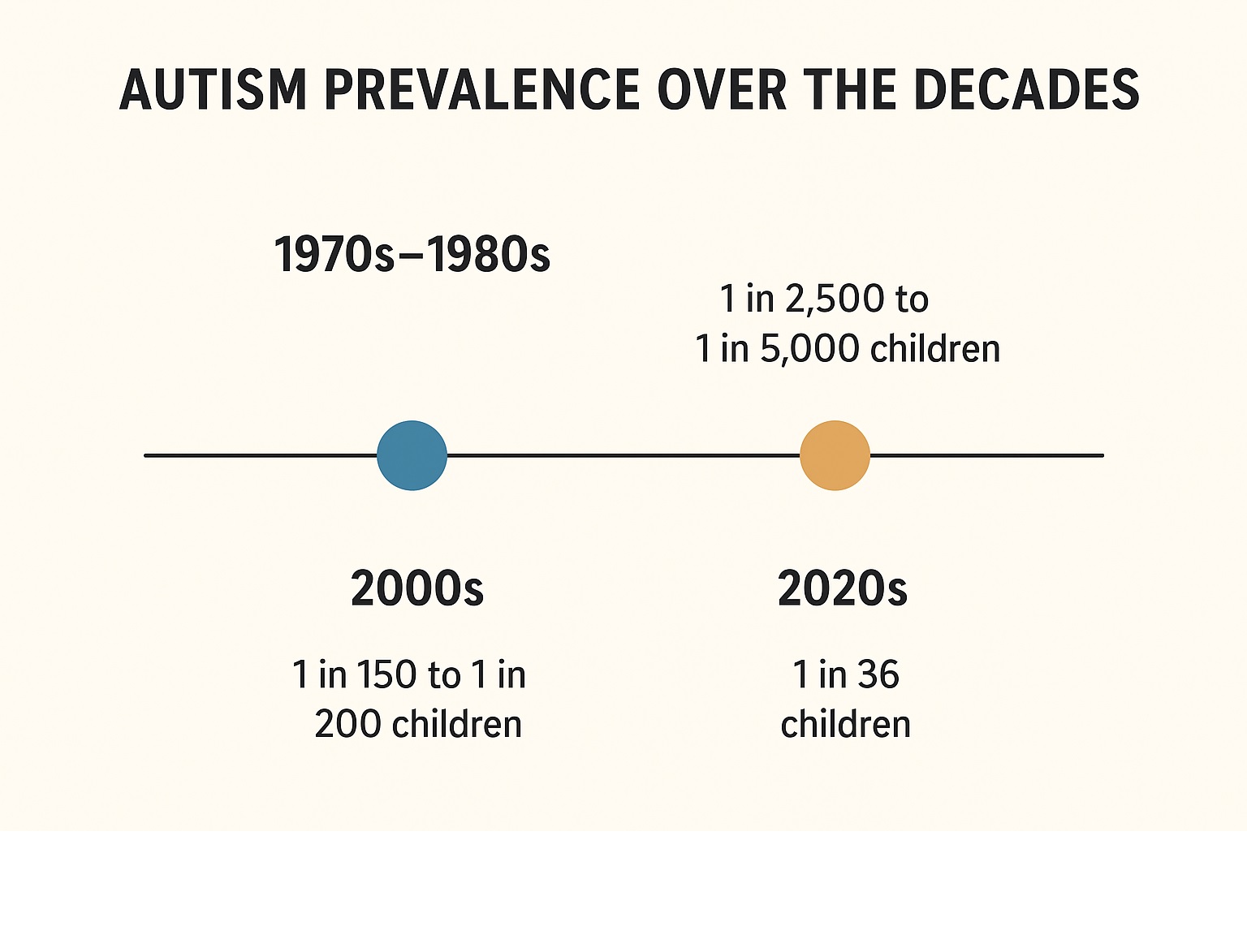
Why Autism is Increasing
Autism is increasing, and many people notice it today. Compared to 50 years ago, more children receive a diagnosis. This rise does not always mean more children have autism. Several factors explain why it seems more common now.
Broader Diagnostic Criteria
Doctors now use a wider definition of autism. Earlier, only severe cases received a diagnosis. Children with mild symptoms were often missed. Today, autism is called Autism Spectrum Disorder (ASD). It includes both mild and severe forms. This change alone captures many more children.
Increased Awareness
Awareness about autism has grown significantly. Parents, teachers, and doctors know the signs better. Schools provide training to recognize early symptoms. Media coverage also educates the public. As a result, more families seek evaluation. Hence, autism is increasing in reported numbers.
Better Screening and Early Detection
Screening for autism happens more often today. Pediatricians check children during routine visits. Schools also use tools to identify developmental issues. Early detection helps children receive support sooner. However, frequent screening can have side effects, which we will discuss later.
Reduced Stigma
Families now feel more comfortable seeking help. Earlier, stigma often prevented parents from getting diagnoses. Today, children with autism receive support without shame. Reducing stigma contributes to more reported cases. Therefore, autism is increasing partly because people are not afraid to ask for help.
Reporting and Documentation Changes
Government programs, schools, and insurance companies require official diagnoses. These systems document more cases than before. Better record-keeping makes autism appear more common. It also helps children access educational and medical services.
Stay up to date with the latest news. Follow MET on Instagram
Possible Environmental Factors
Some researchers study environmental and genetic causes. Prenatal conditions, toxins, or genetics may play a role. However, these factors do not fully explain the rise. Most evidence points to diagnosis and awareness as main reasons.
Side Effects of Over-Screening
Screening helps, but over-screening can cause problems. Families may feel stress and anxiety from repeated tests. Children may get labeled too early, affecting confidence. Over-diagnosis can strain therapy and school resources. Sometimes, normal behavior is mistaken for autism. Also, families spend extra time and money on unnecessary tests.
Autism is increasing mainly because we recognize it more. Broader definitions, awareness, and better screening drive the numbers. Reduced stigma and proper documentation also contribute. Over-screening has drawbacks, but early detection remains important. Understanding these reasons helps parents and educators respond effectively.
Autism is increasing not only in reality but also in perception. Many children now receive timely support that was unavailable decades ago. Awareness, diagnosis, and social acceptance have improved. Families can help children reach their potential by focusing on proper care and guidance.
Also Read:
Middle East AI Hubs: How the Region Is Leading AI Growth
Gold Price in Dubai Rises Amid Global Demand