

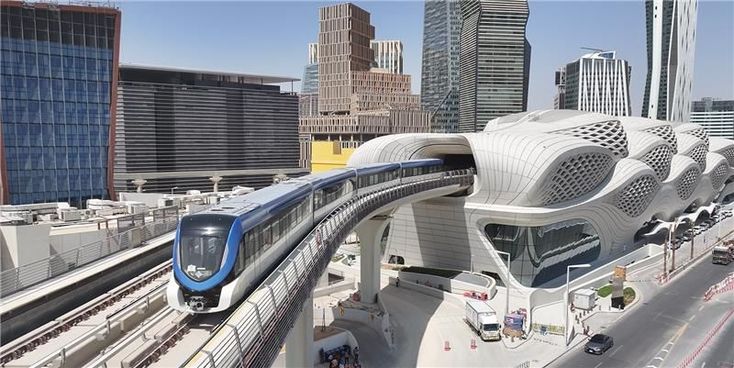
Introduction of the Riyadh Metro in Saudi Arabia
Saudi Arabia has taken a major step toward improving urban mobility with the launch of the Riyadh Metro. Officially operational since December 1, this project aims to tackle severe traffic congestion in the capital, where even a short 5-km trip could previously take an hour. The new metro is a game-changer for a city that has long depended on private vehicles.
Metro Features and Phased Opening
The Riyadh Metro spans six color-coded lines covering 176 km with 85 stations, making it one of the world’s largest driverless networks. The project is being opened in phases: the Blue, Yellow, and Purple Lines are operational, while the Red and Green Lines launched on December 15. The Orange Line will follow by January 2025. Over 40% of the tracks run underground, enabling faster commutes.
Easing Traffic and Environmental Impact
The metro, equipped with advanced technology and fully automated trains, can carry 1.2 million passengers daily, with plans to increase capacity to 3.6 million. This shift reduces car dependency, easing gridlock, lowering fuel usage, and cutting pollution, creating a more sustainable and efficient city.
Economic and Social Benefits of Riyadh Metro in Saudi Arabia.
Affordable fares—such as a $5 three-day pass—make the metro a practical choice over private cars. Besides boosting connectivity, the metro drives economic growth by creating jobs, supporting businesses, and attracting foreign investment.
Future Innovations and Smart City Integration
Saudi Arabia is also exploring aerial mobility, with flying taxis planned by 2026 to enhance transport options. These initiatives are part of Vision 2030, aiming to modernize infrastructure and improve residents’ quality of life.
Global Inspiration and Long-Term Goals
Drawing lessons from cities like Dubai and Hong Kong, Saudi Arabia is creating an integrated public transport system to match its fast-paced development, ensuring Riyadh remains a hub of opportunity and progress.