

The Story of the One Dirham Note
The one dirham note holds a special place in UAE’s currency history. It circulated shortly after the first one dirham coin launched on May 19, 1973. This marked 534 days after the birth of the United Arab Emirates.
A Rare But Real Currency
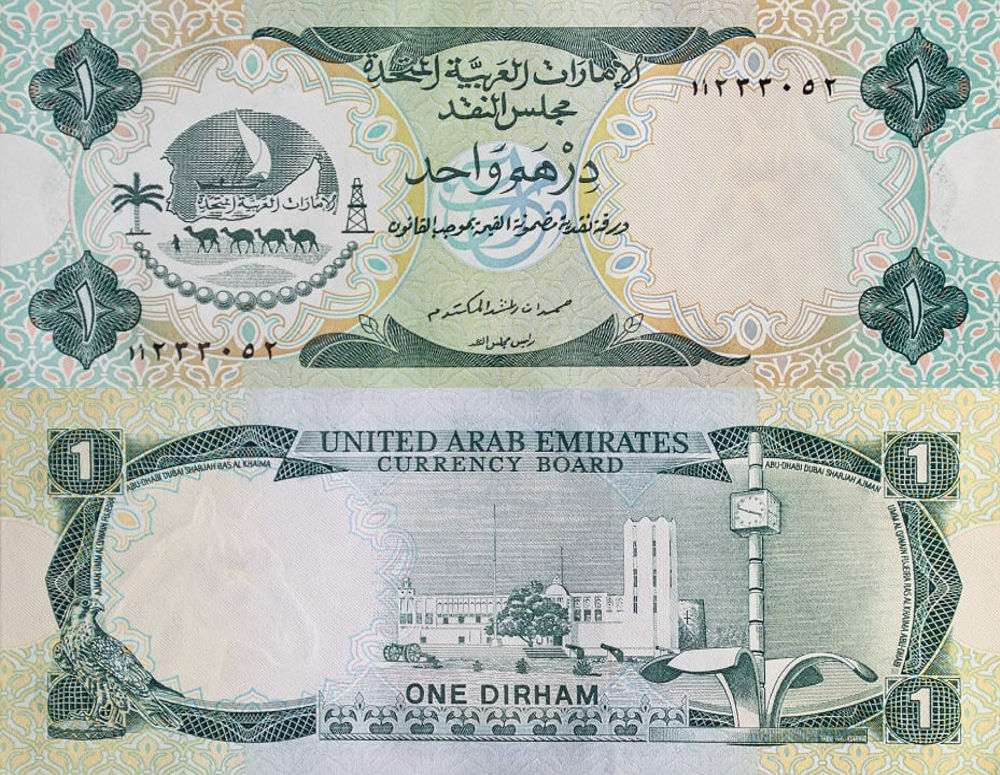
Many people know the one dirham coin but forget the one dirham note existed. This rare banknote featured UAE icons like palm trees, pearls, camels, and oil rigs. It also displayed a boat sailing in water shaped like the UAE’s silhouette.
Design with Deep Meaning
The note represented unity, culture, and tradition through its illustrated landmarks and national symbols. Meanwhile, the coin’s design never changed since 1973 and still features the traditional dallah pot. The dallah symbolizes Arabian identity, hospitality, and the UAE’s welcoming nature.
Coin and Note: Same Era, Different Paths
The one dirham note faded quickly from circulation after the coin gained more popularity. In contrast, the coin remained part of daily life—used for parking or buying chai. The coin was made in the UK by artist Geoffrey Colley, who designed global currencies.
Birth of the UAE Dirham
Before the dirham, people used Gulf rupees, Qatari riyals, and Bahraini dinars. In 1966, the Gulf rupee lost value, prompting a shift in regional currencies. From 1966 to 1973, the Qatar-Dubai riyal became the main currency. The UAE dirham officially launched in 1973, uniting the seven emirates with one currency.
First Banknotes and Emirate Symbols
The first banknotes came in 1, 5, 10, 50, and 100 dirham denominations. Each note featured a landmark representing a different emirate’s unique identity. For instance, the one dirham note displayed Sharjah’s Clock Tower and Police Fort.
Celebrating 52 Years of Currency
Today, the UAE dirham celebrates 52 years of stability, unity, and national pride. Though gone, the one dirham note remains a proud reminder of the nation’s early journey.